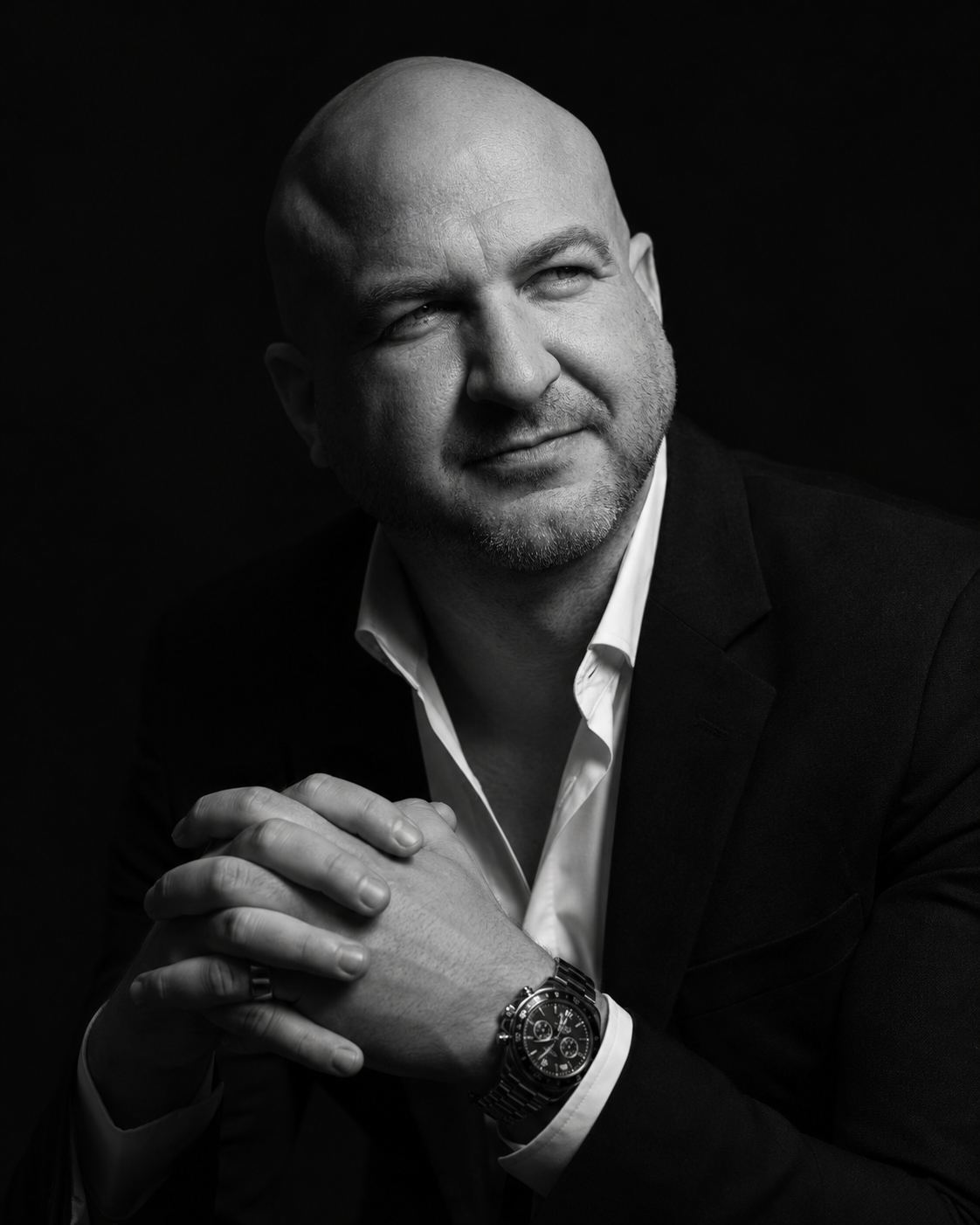
Executive perspective
The ability to see across functions and recognize the variable affecting several outcomes at once.
Nick Cavuoto provides fractional executive leadership for established companies that need commercial clarity, cross-functional alignment, and direct ownership of the initiatives too important to remain another discussion.
From a fractional engagement
Role boundary
The leadership team has discussed the problem. The presentation exists. The opportunity is real. The departments are active. But the result still lacks one accountable owner. Marketing is producing activity. Sales is working its own process. The CEO is carrying the integration personally.
Everyone is responsible for a piece. Nobody owns the outcome across the pieces. That is the gap Nick is built to enter.
A fractional executive is a senior leader, a CMO, CRO, or initiative owner, who joins a company part-time, with real authority and accountability, to lead a defined commercial outcome. Unlike a consultant, who advises from outside the work, a fractional executive sits inside it: setting priorities, directing the team, owning the scorecard, and answering for the result. Unlike a full-time hire, the engagement is scoped to the initiative, typically twelve to eighteen months, without adding a permanent seat to the payroll.
Companies bring in a fractional executive when the strategy is clear but ownership is missing: revenue has plateaued, sales and marketing run as separate systems, or a high-value initiative keeps stalling in meetings. The role exists to close the gap between what leadership has decided and what the organization actually does.
One owner, one outcome
A conceptual model of how the role integrates, not a quantified claim of causality. Inspect one authored public mandate pattern below. It is orientation, not a proposed scope, assessment, or guarantee.
What Nick brings
The ability to see across functions and recognize the variable affecting several outcomes at once.
Organizational problems are shaped by incentives, identity, trust, and unspoken resistance, not only process diagrams.
A focus on revenue, profit, market position, and measurable value, not activity for its own sake.
A bias toward moving the highest-leverage issue rather than another layer of analysis.
The willingness to lead the initiative and remain accountable for movement.
Turning an executive idea into priorities, owners, metrics, and work the organization can execute.
The symptoms
Areas of leadership
The engagement
Plain language
Every engagement runs on a defined mandate: the outcome, the metric, decision rights, reporting cadence, and the trigger that transfers ownership back to the company, agreed before the work begins. Engagements are scoped to outcome, role, access, and time commitment; terms are presented after the executive conversation.
Fit
The company has established revenue and product-market credibility, a CEO or sponsor with authority to act, and a leadership team willing to share data and reality. The most natural fit is often an owner-led or founder-led company roughly $3 million to $25 million in annual revenue, though fit depends more on the problem and scope than the number alone.
Leadership wanting validation but not change, no one able to sponsor the work, or an engagement being used to avoid a necessary permanent hire indefinitely.
Engagement shapes
FAQ
Tell us the initiative, the sponsor, and the obstacle. The conversation determines fit, scope, and shape.